TrainFlow - AI-powered training platform
Senior Product Designer
My role
Full-cycle product design: user research, UX architecture across 70+ user flows, and a cross-platform design system. Designed the AI Coach feature end-to-end and built the product's first monetization flow.
Results
— 19% free-to-paid and 34% paywall-to-payment conversion — the product's first real revenue.
— Increased user feedback volume by 17% through a redesigned check-in flow.
— Cut localization work by 70–80% with custom Figma automation.
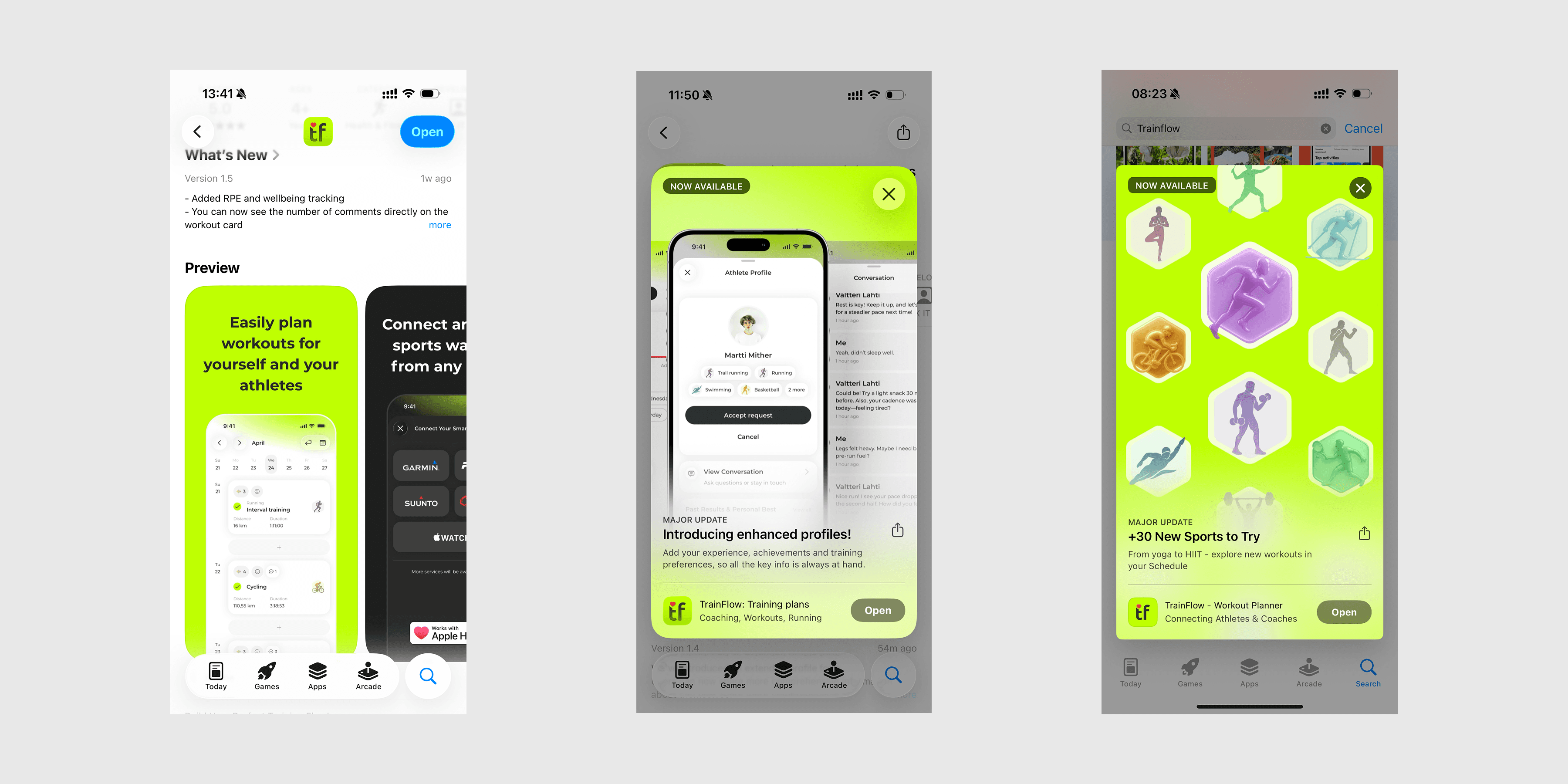
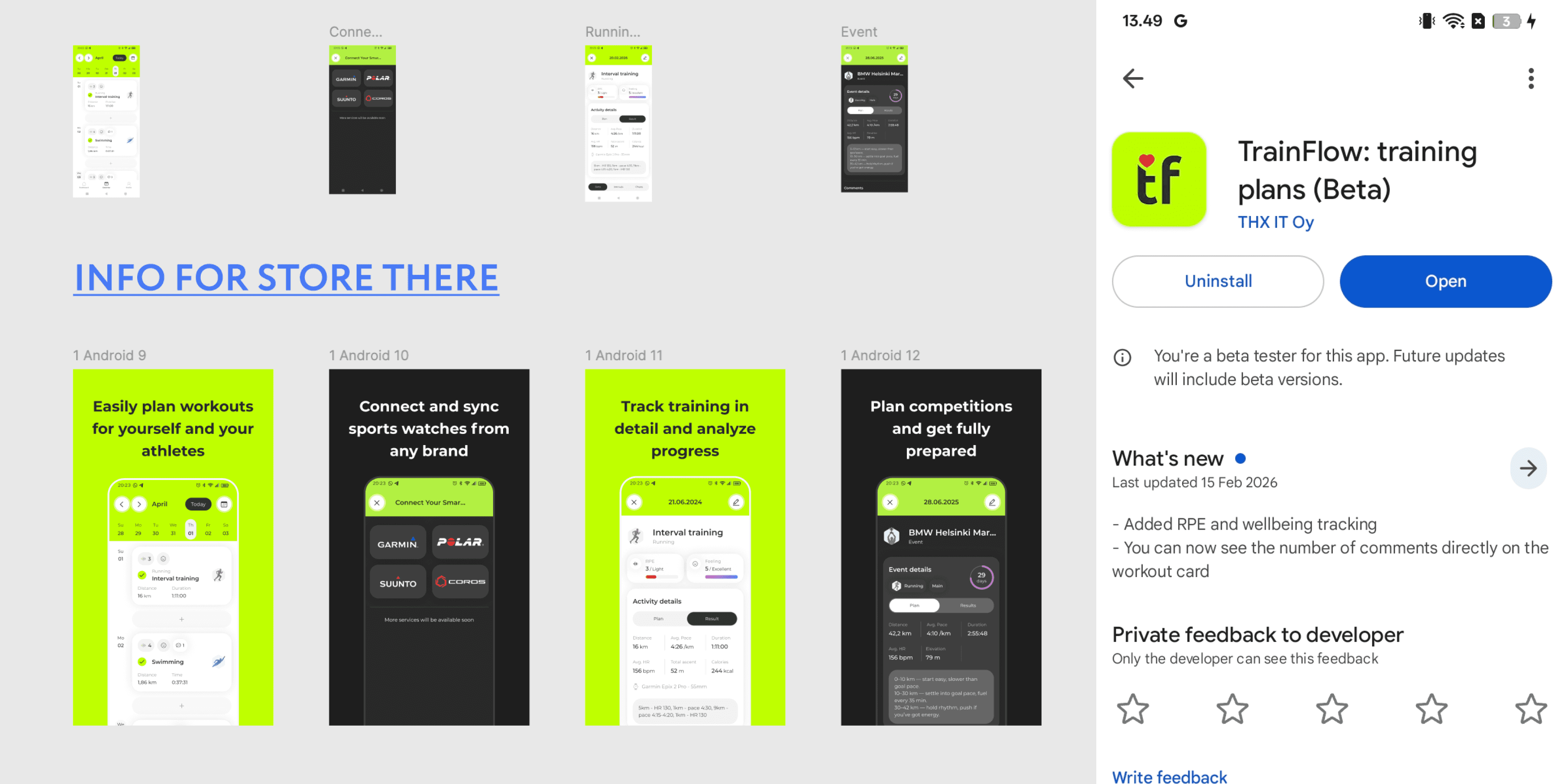
— Published on the App Store and Google Play.
Solving fragmented training workflows
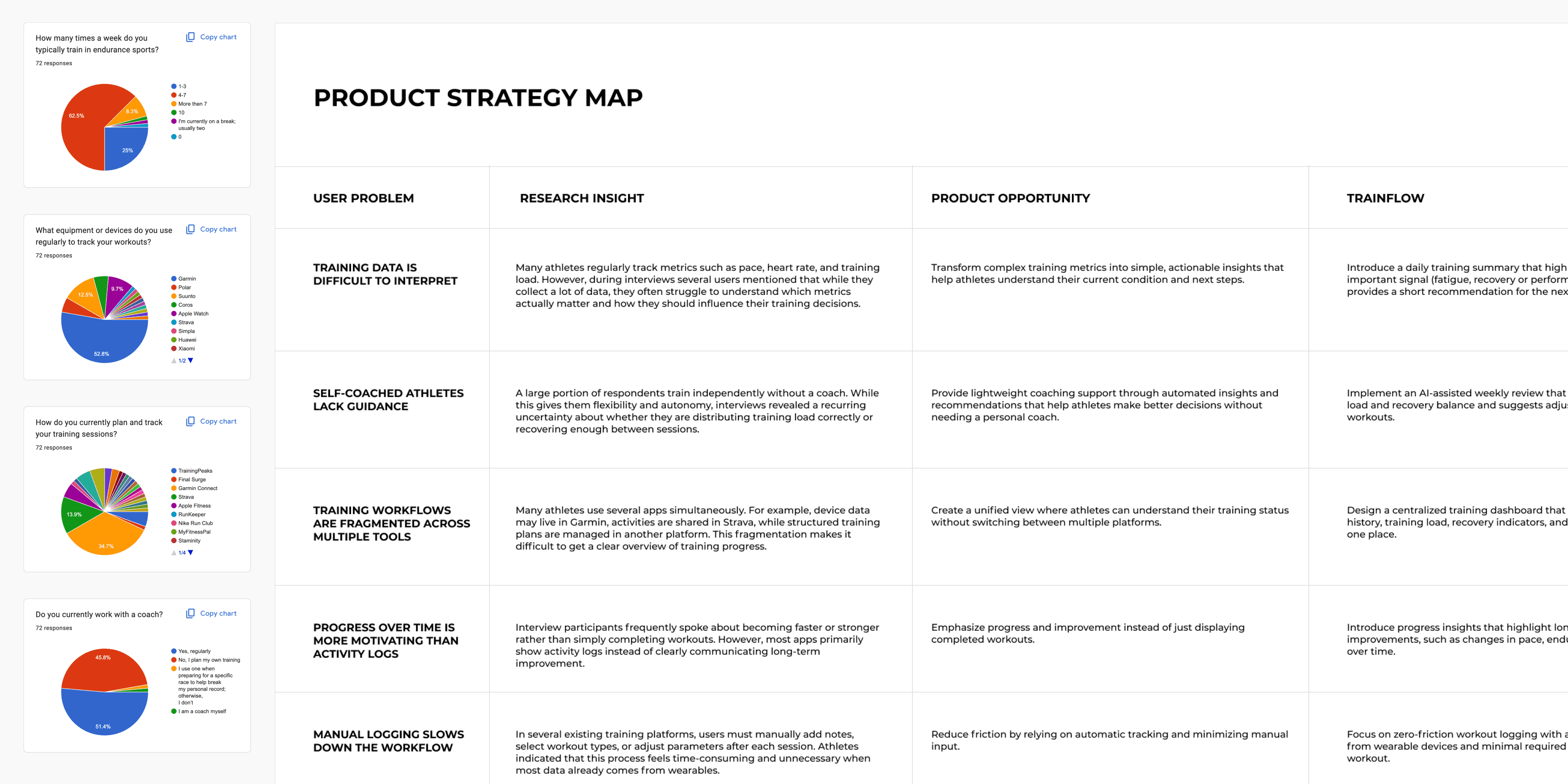
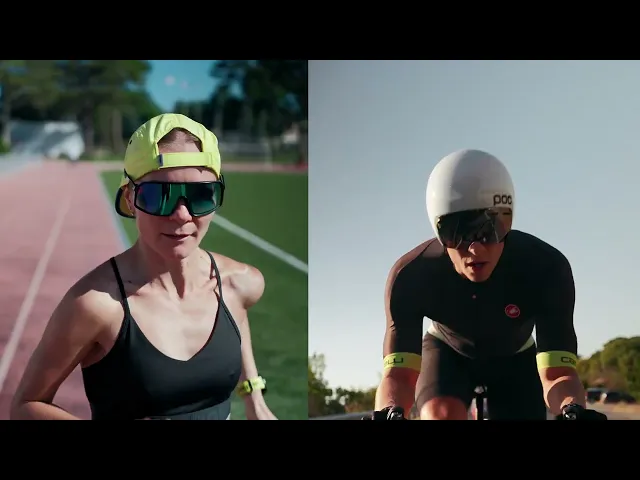
Many endurance athletes train consistently, but they struggle to understand their progress or training load. Workout data is tracked in specialized apps. Training plans are stored in spreadsheets. Communication with coaches happens through messaging apps. As a result, training data becomes fragmented and hard to interpret.
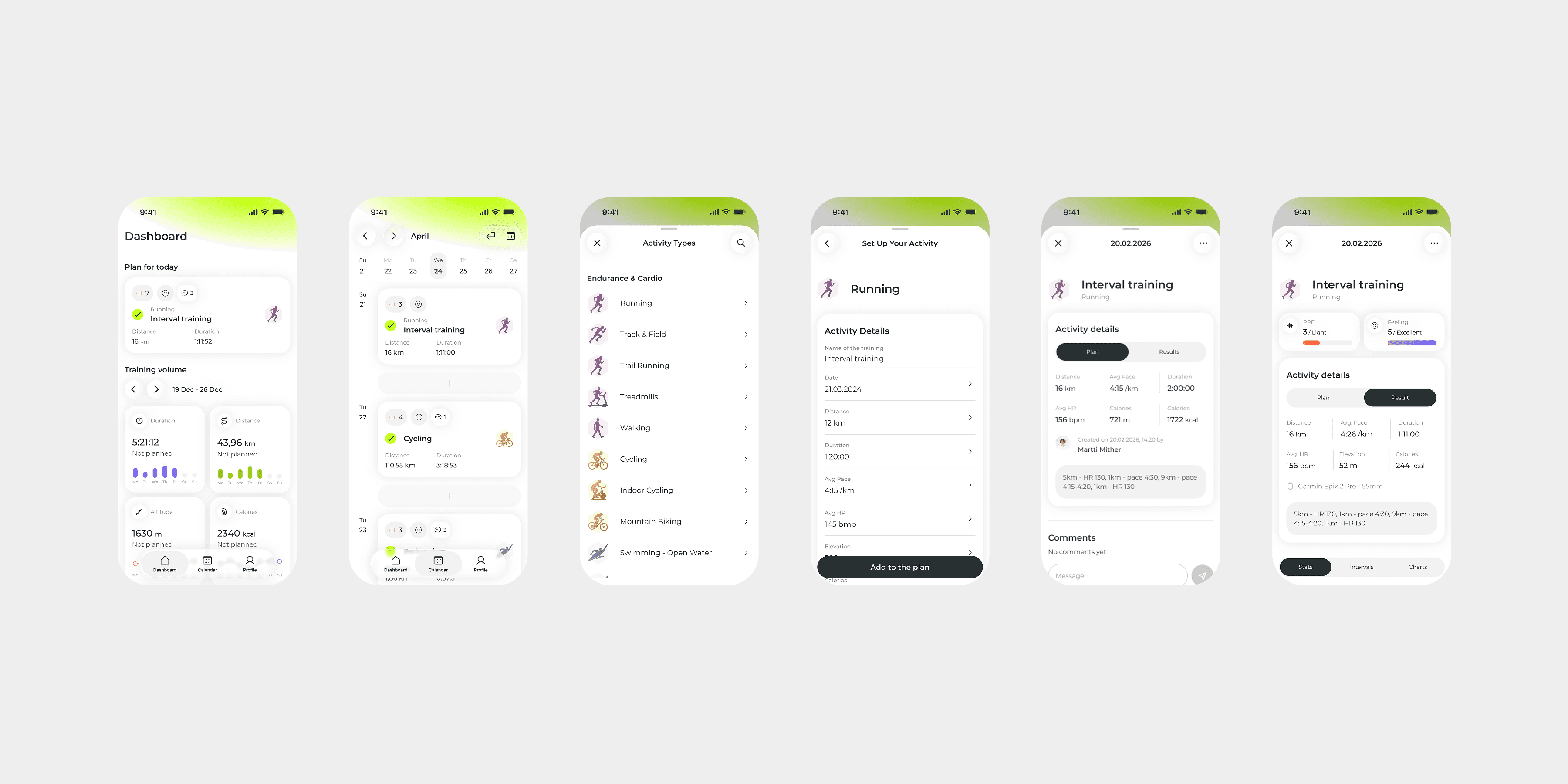
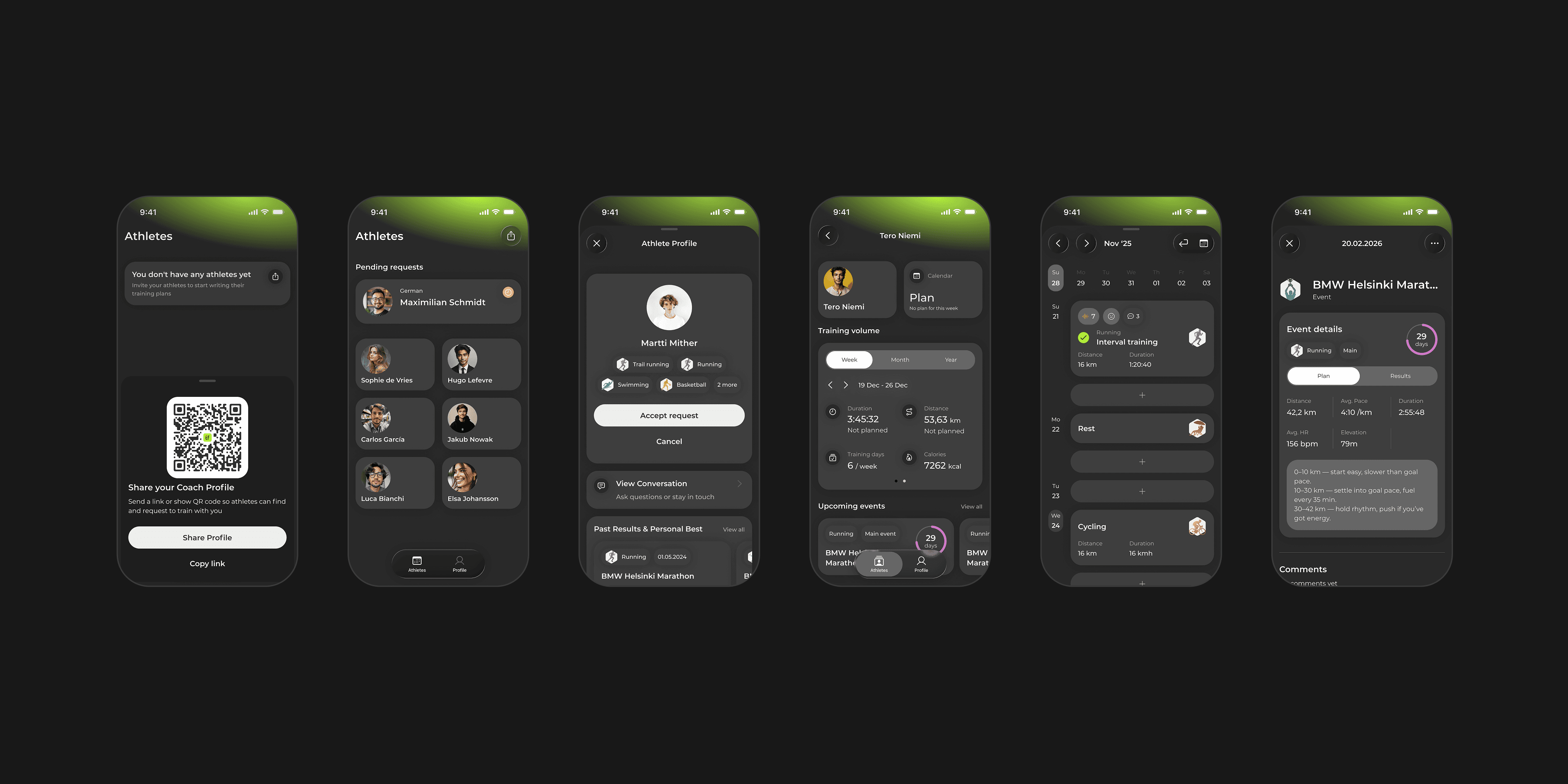
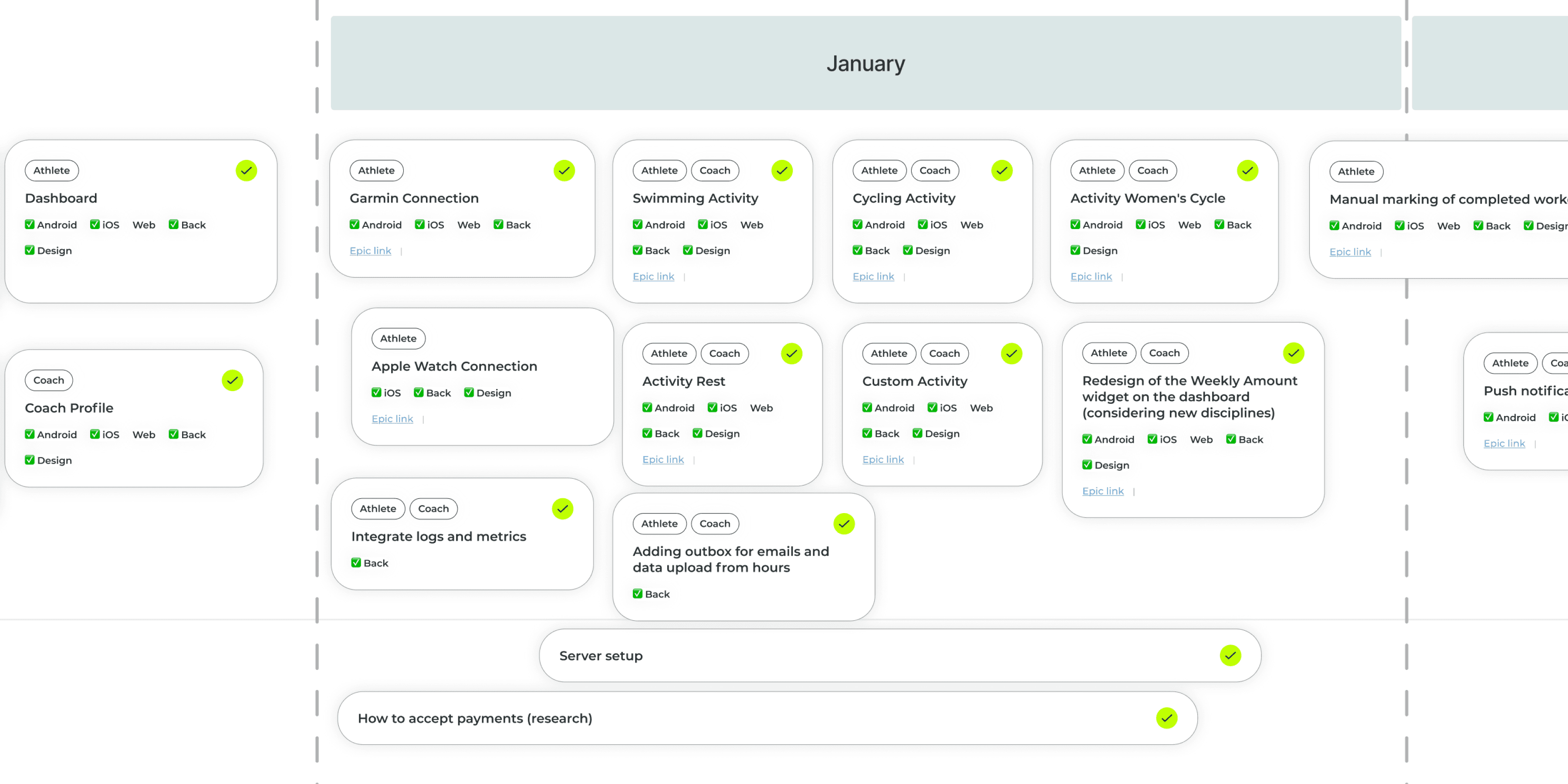
When we started working on TrainFlow, the goal was to bring these workflows into one structured platform. The product combines training plans, workout data, and coach communication. It also uses AI-driven insights to help athletes and coaches understand training progress and make better decisions.
Turning research into product direction
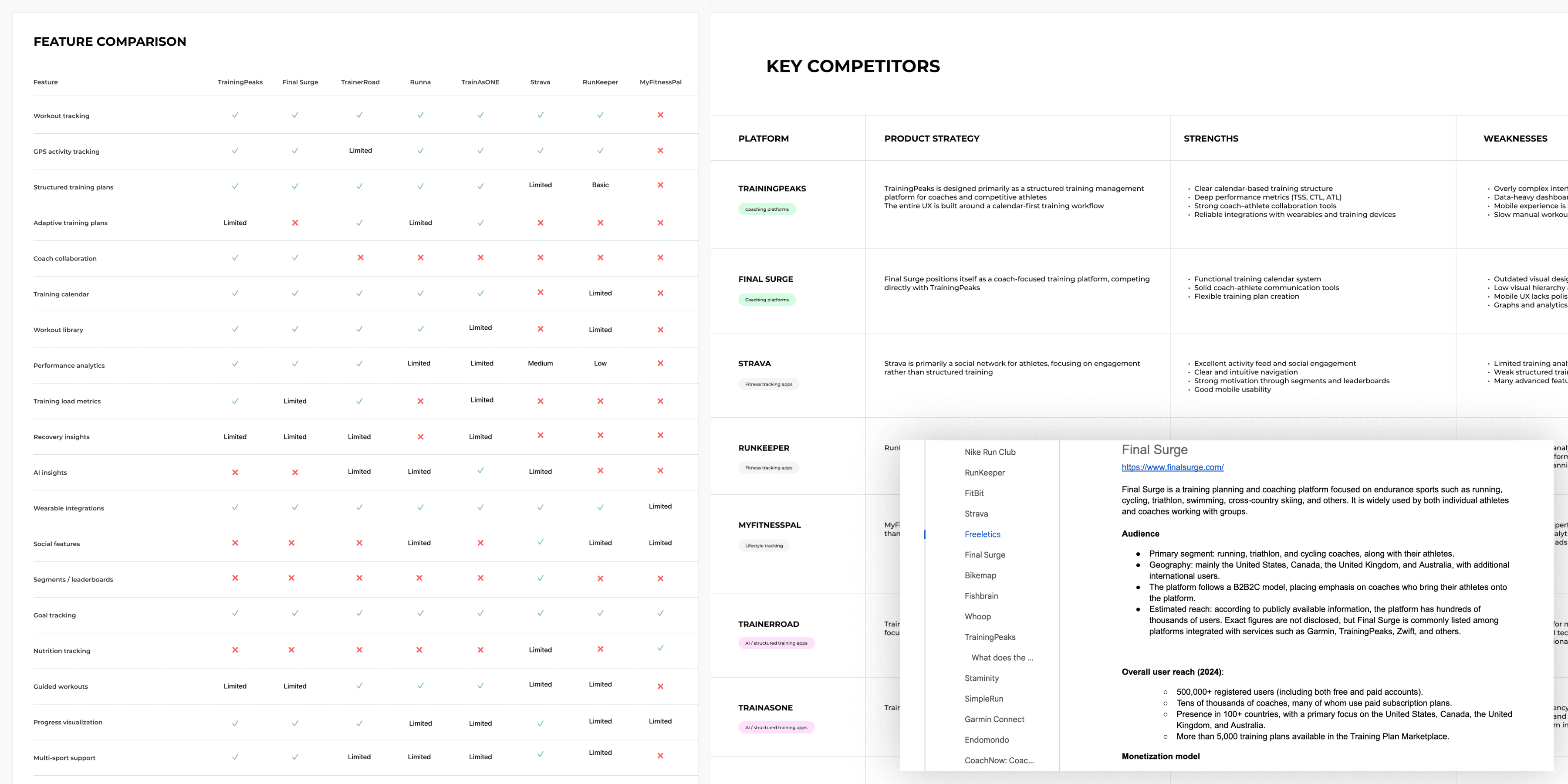
I started with user interviews with endurance athletes. I also ran a competitive analysis of existing training platforms. The research showed that athletes collect a lot of training data, but they often lack clear insights to understand their progress over time.
Many users also described friction in communication with coaches. They found it hard to keep training plans, workouts, and feedback in sync. These findings helped define the initial product direction and prioritize a focused MVP scope.
Designing a scalable UX architecture
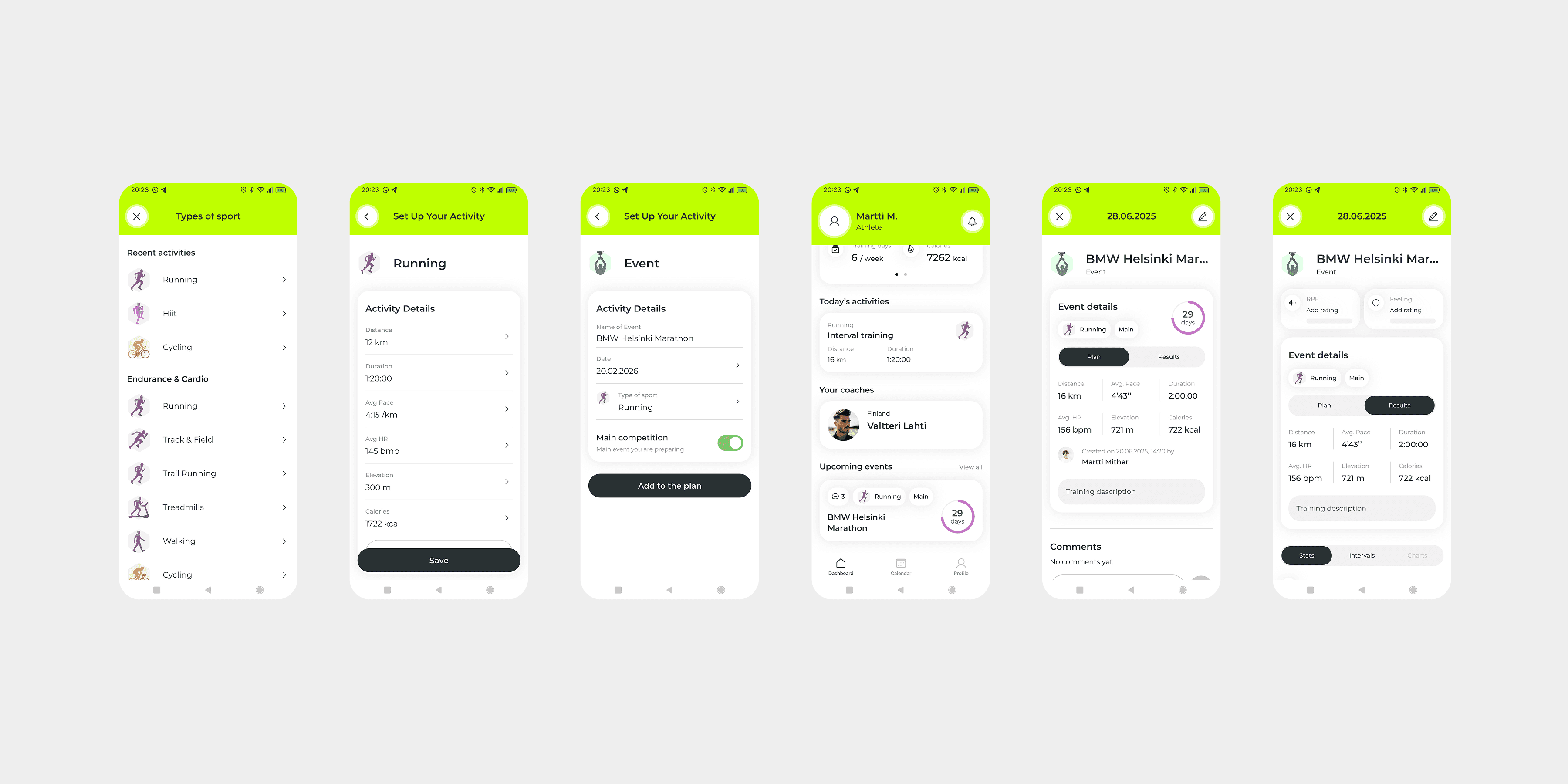
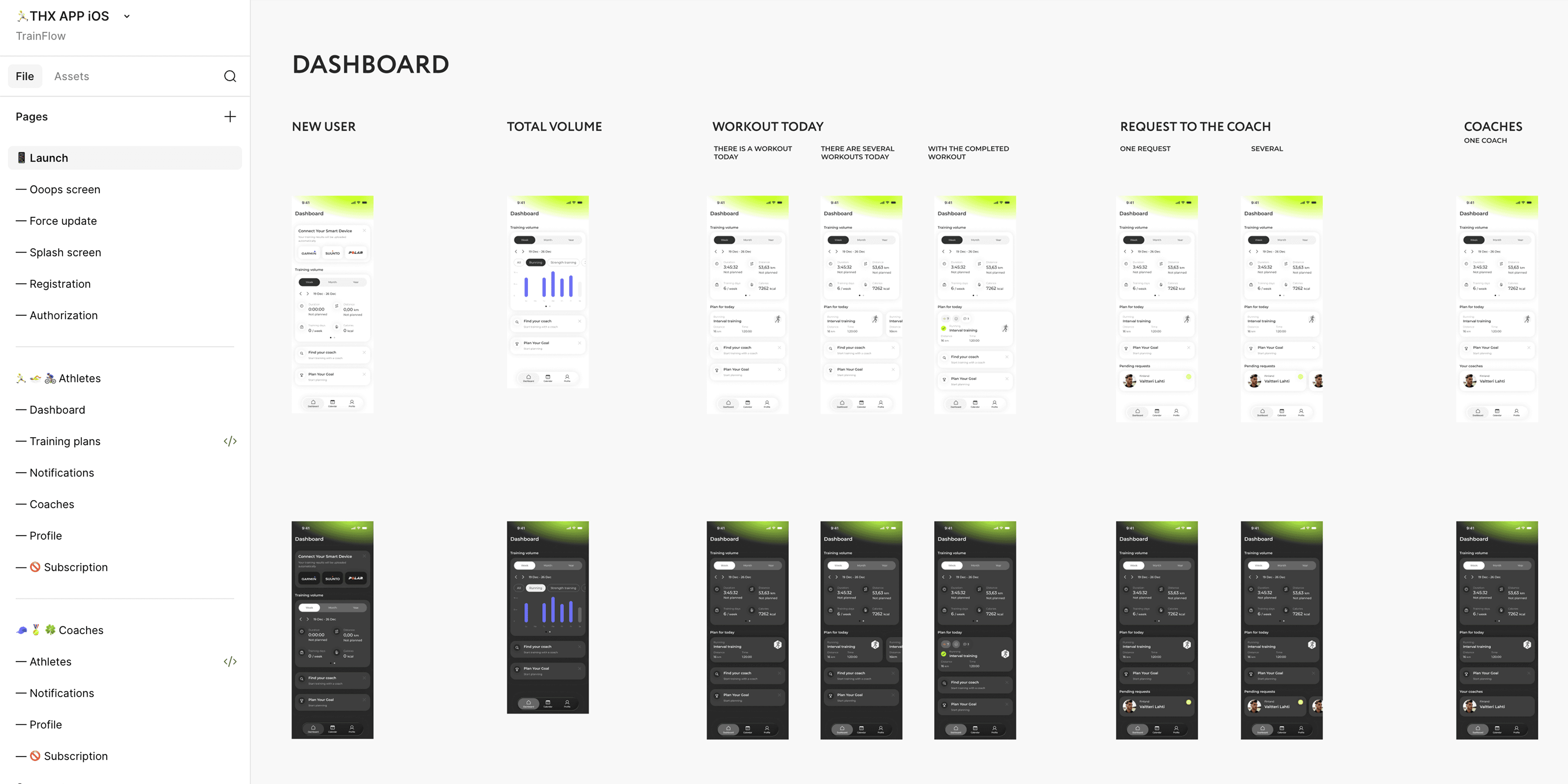
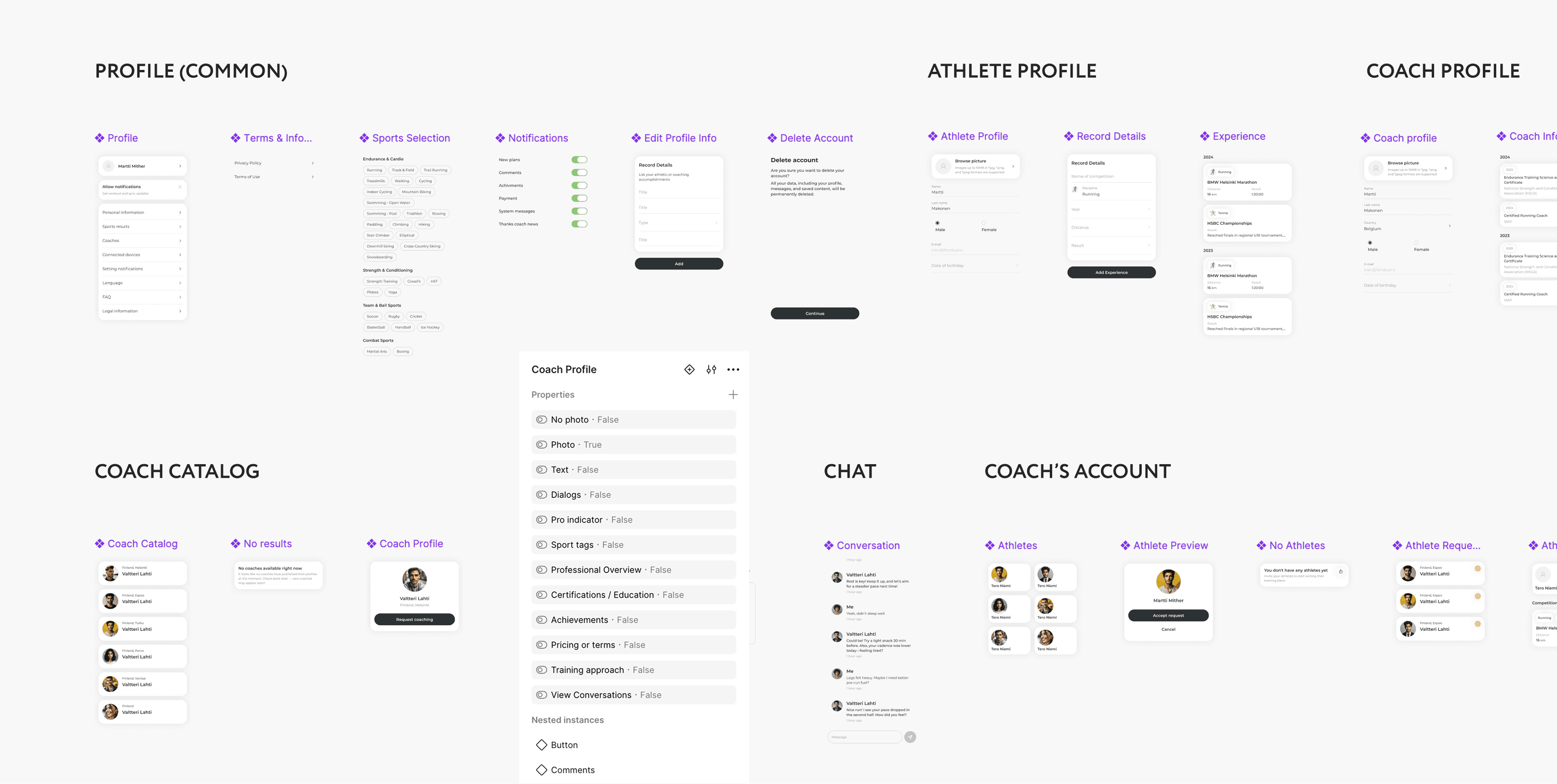
Based on these insights, I designed the core UX architecture of the product. The platform had to support many training scenarios while staying clear and easy to navigate on mobile devices.
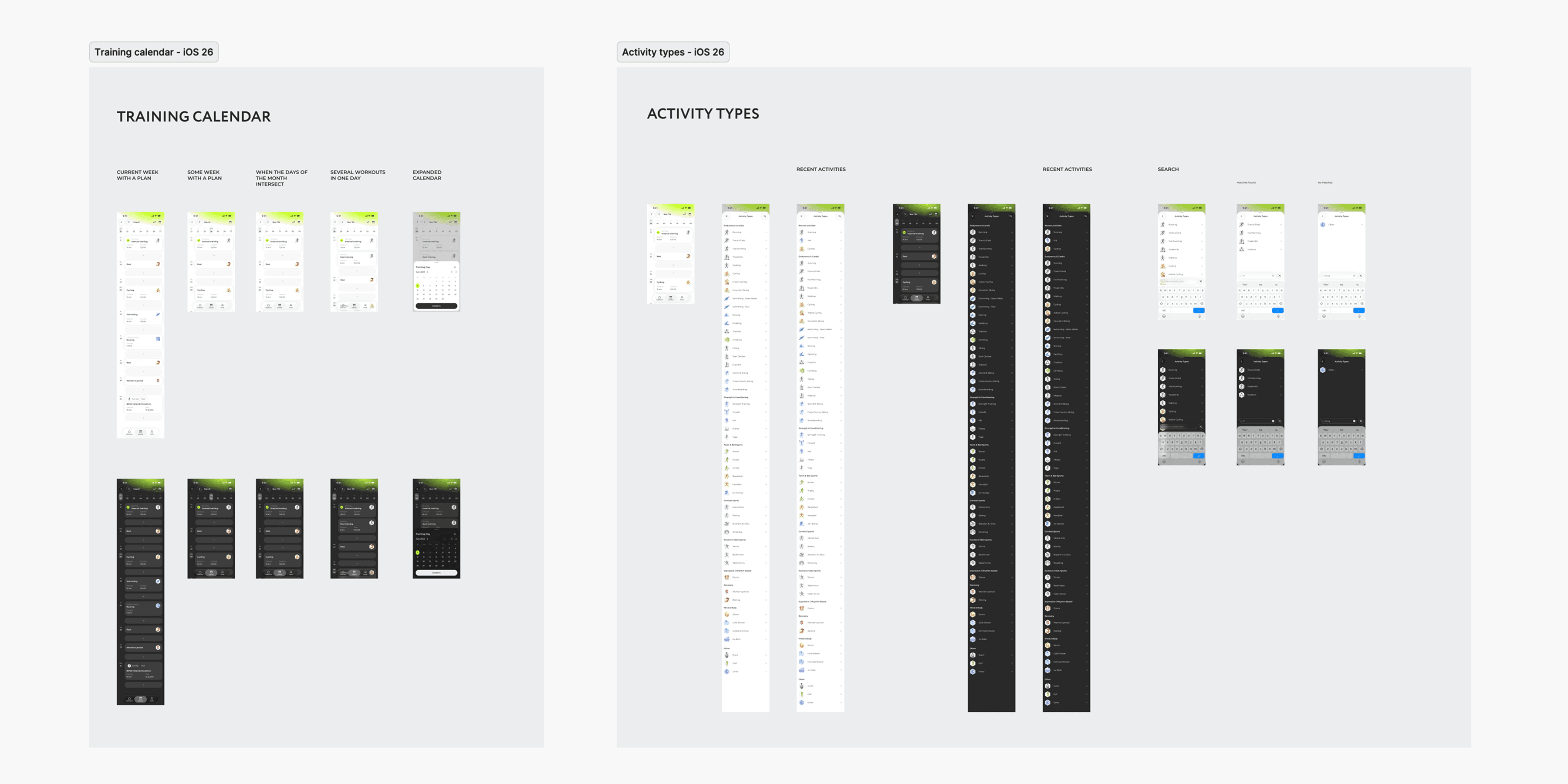
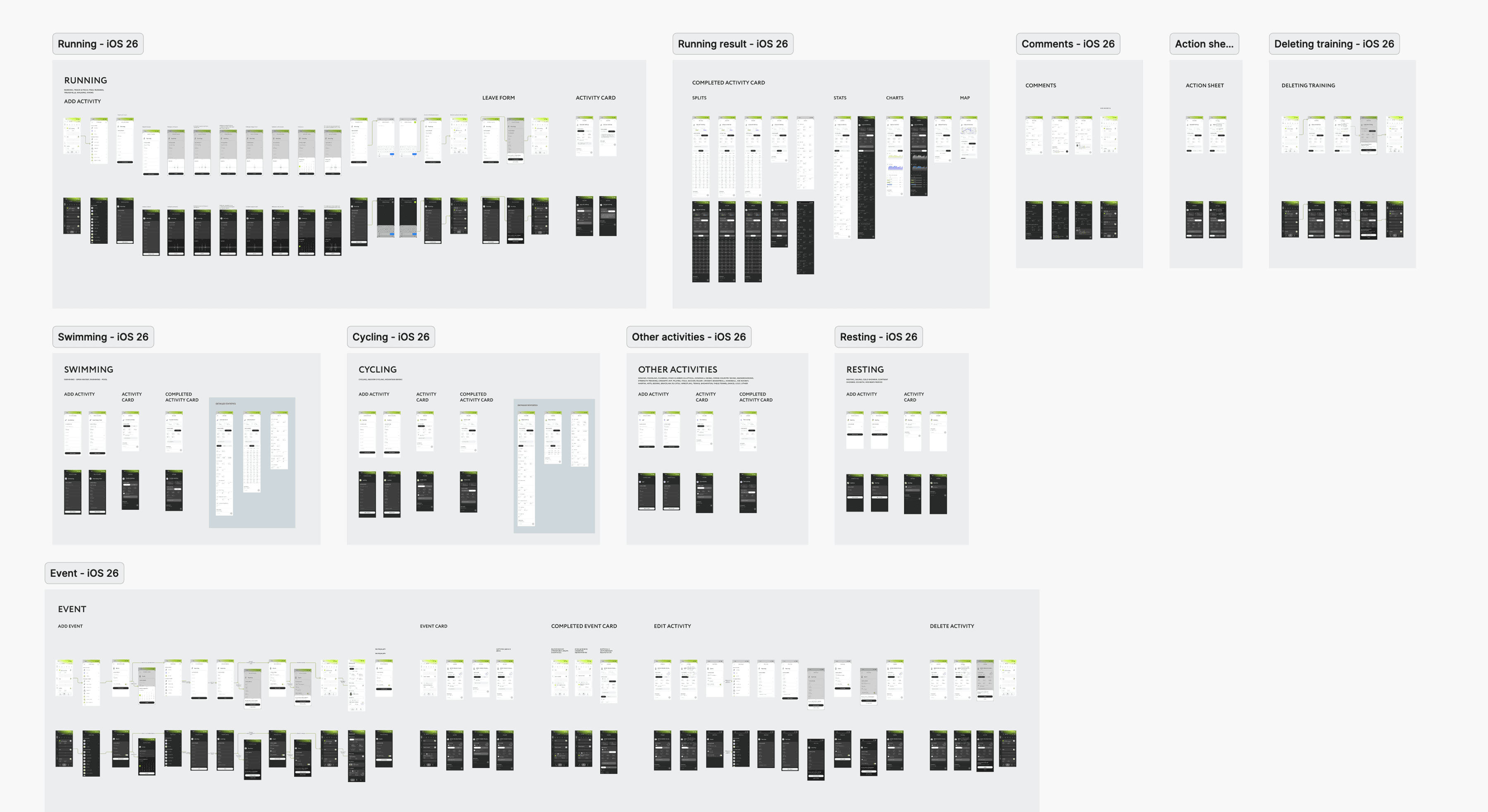
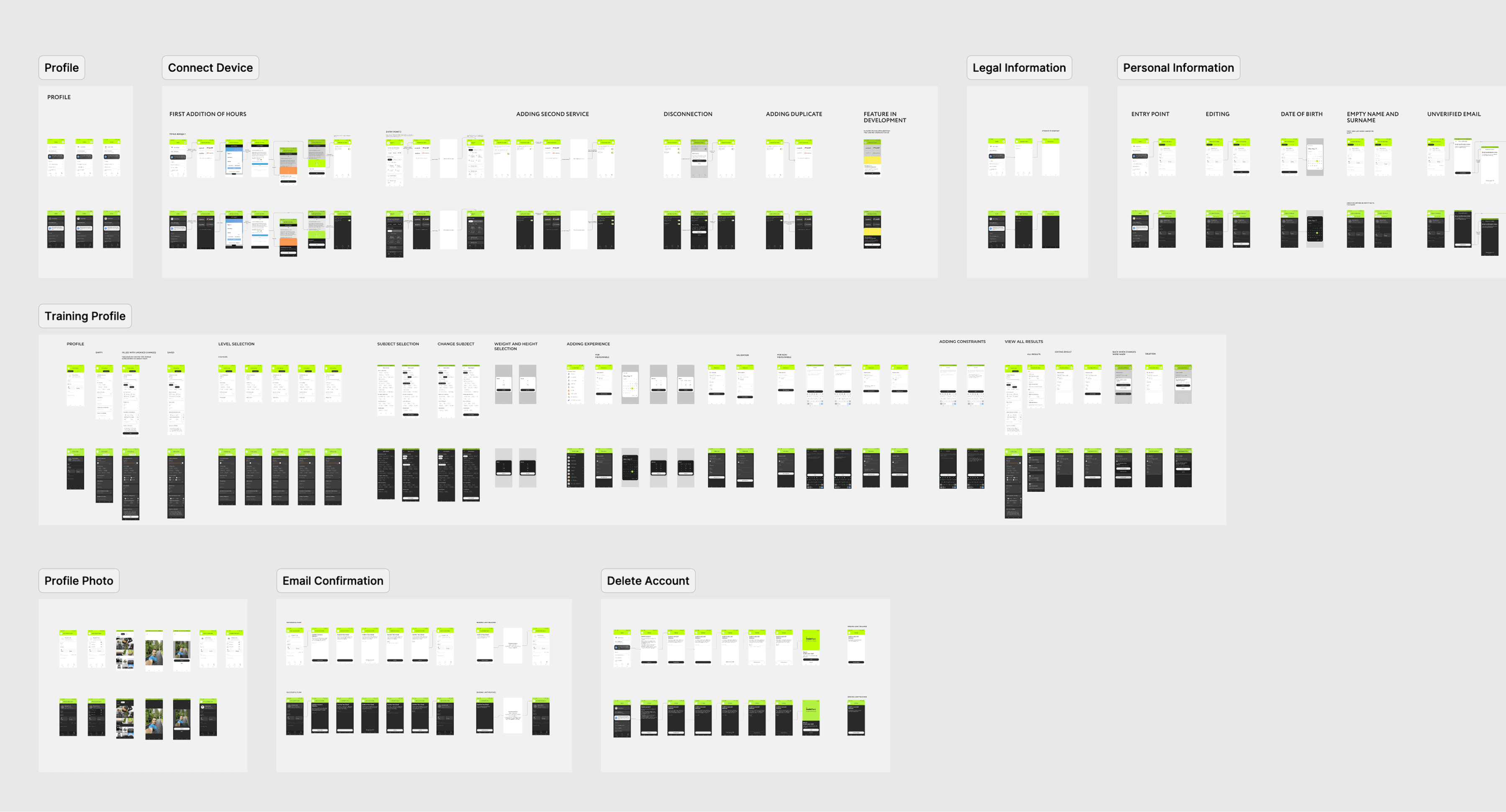
In total, I mapped and visualized more than 70 user flows. This covered the full user journey: onboarding, athlete setup, training plan management, workout tracking, and interactions with the AI coach.
Building a scalable cross-platform design system
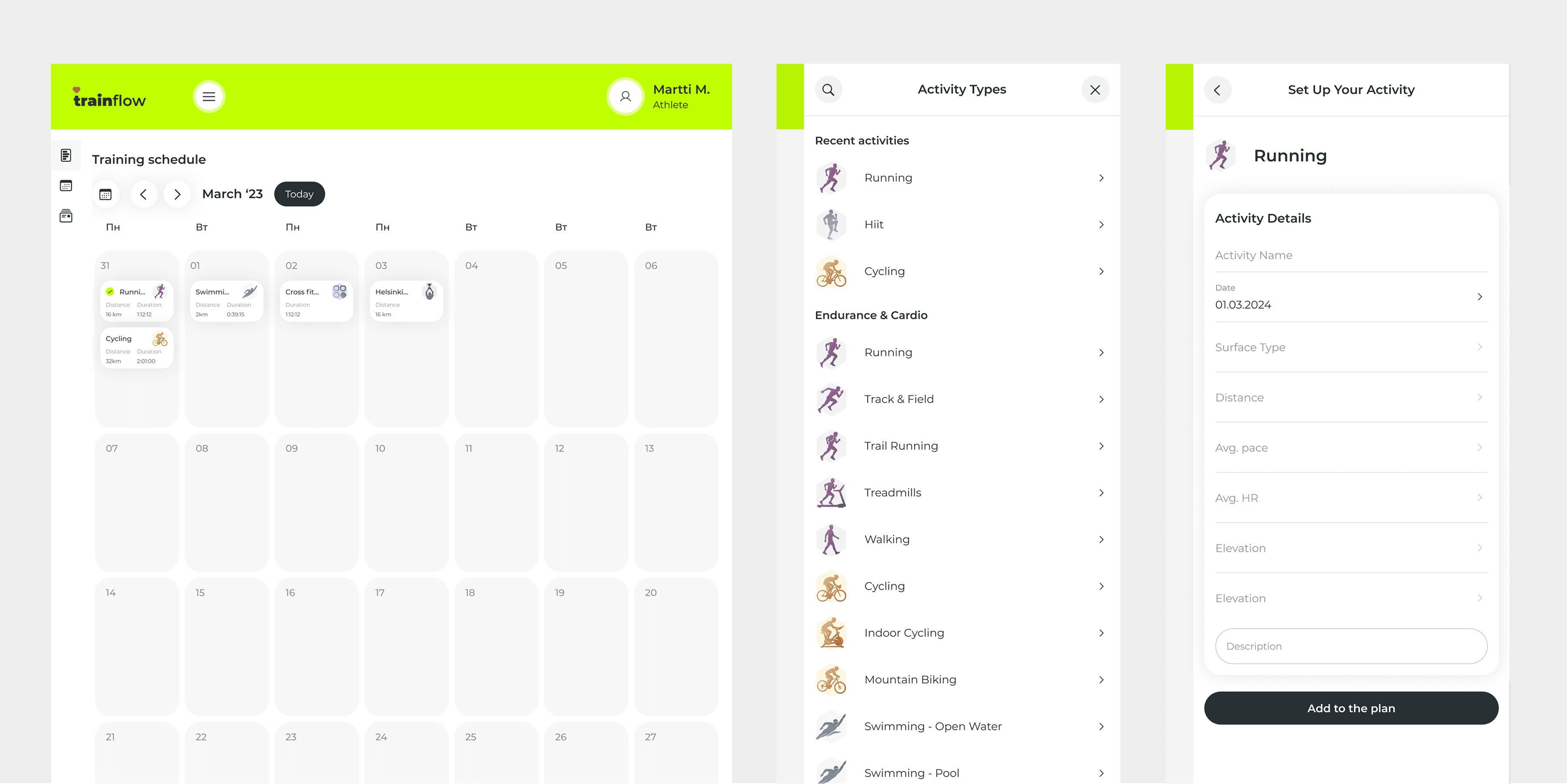
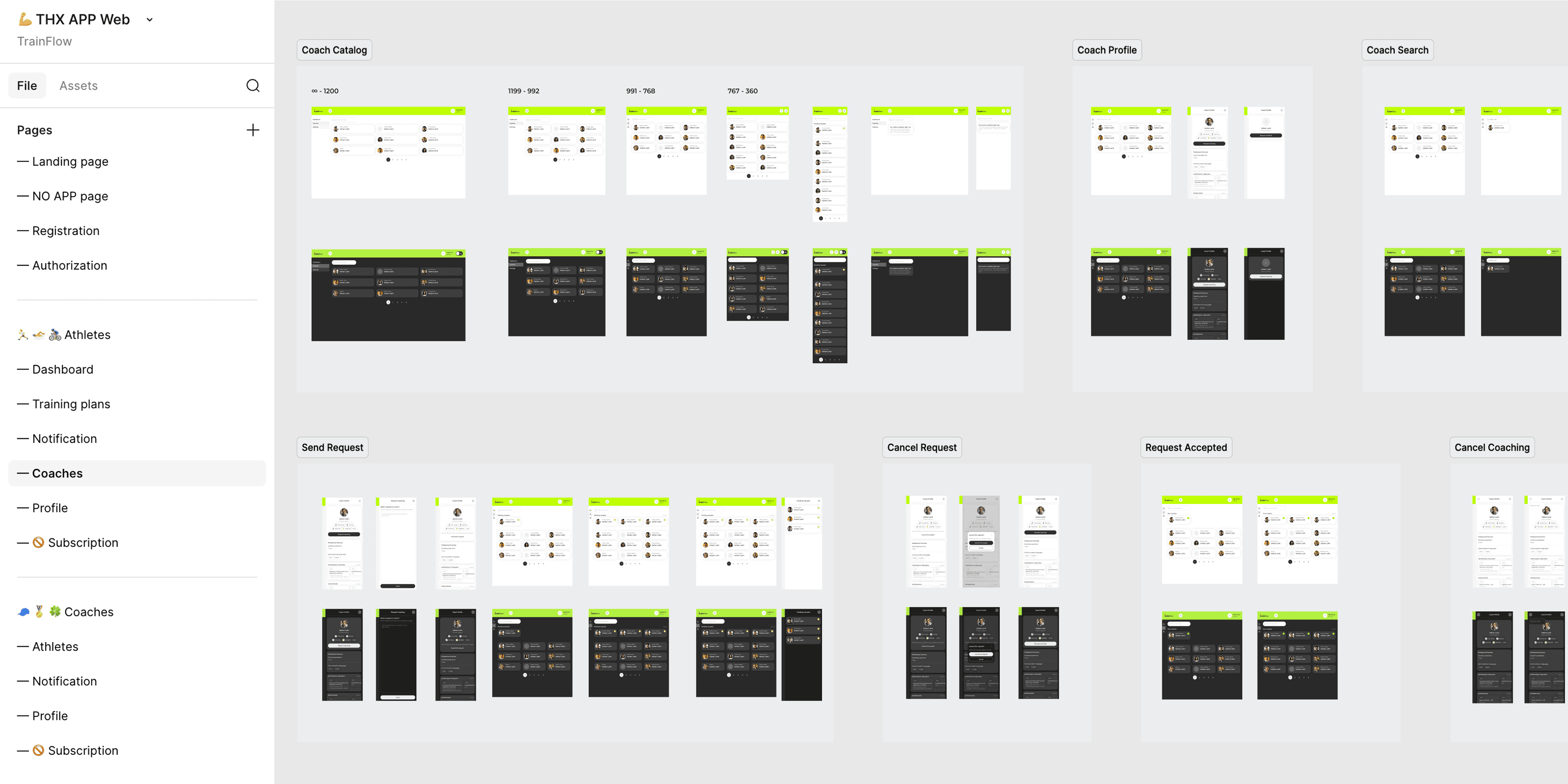
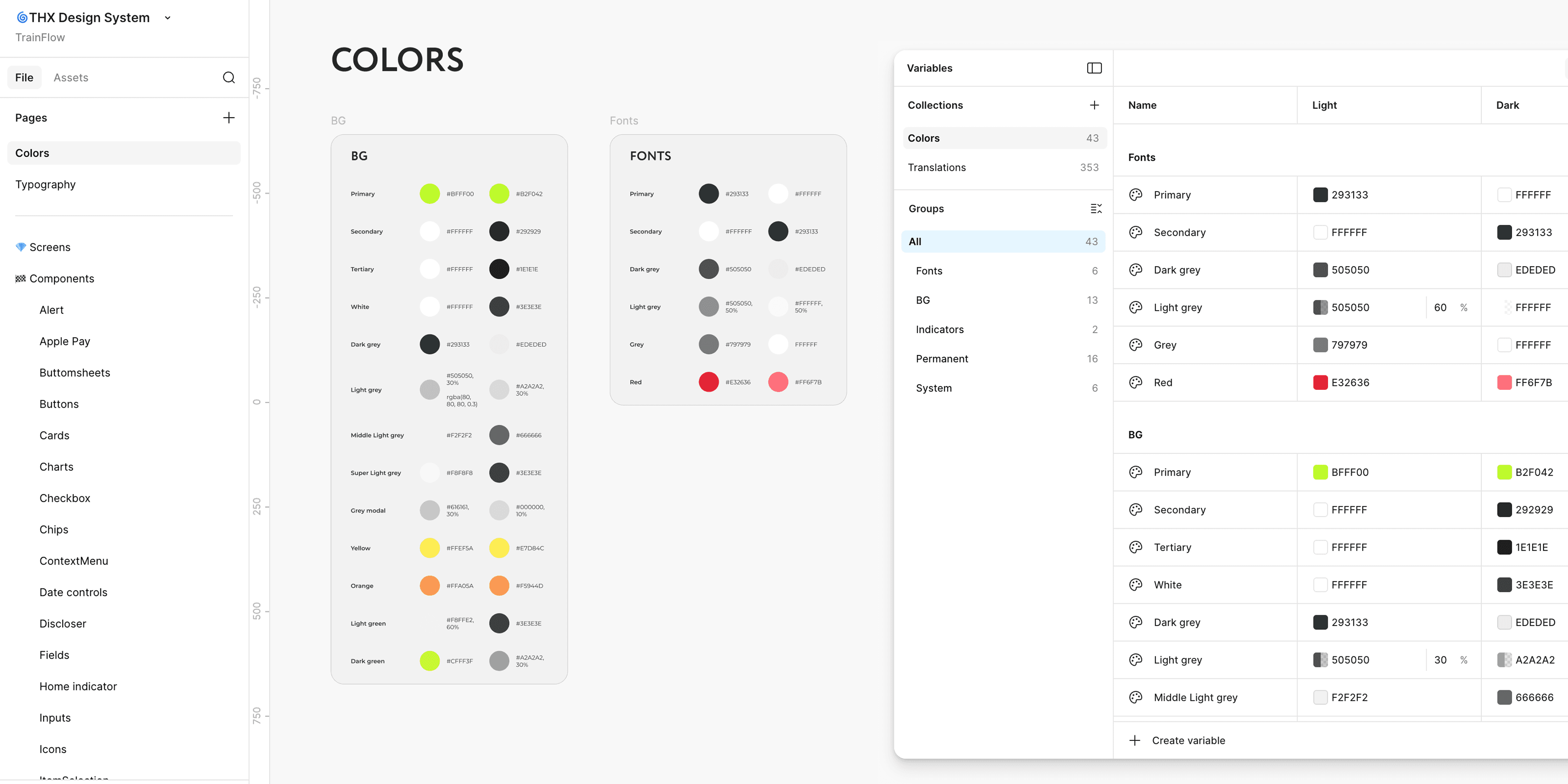
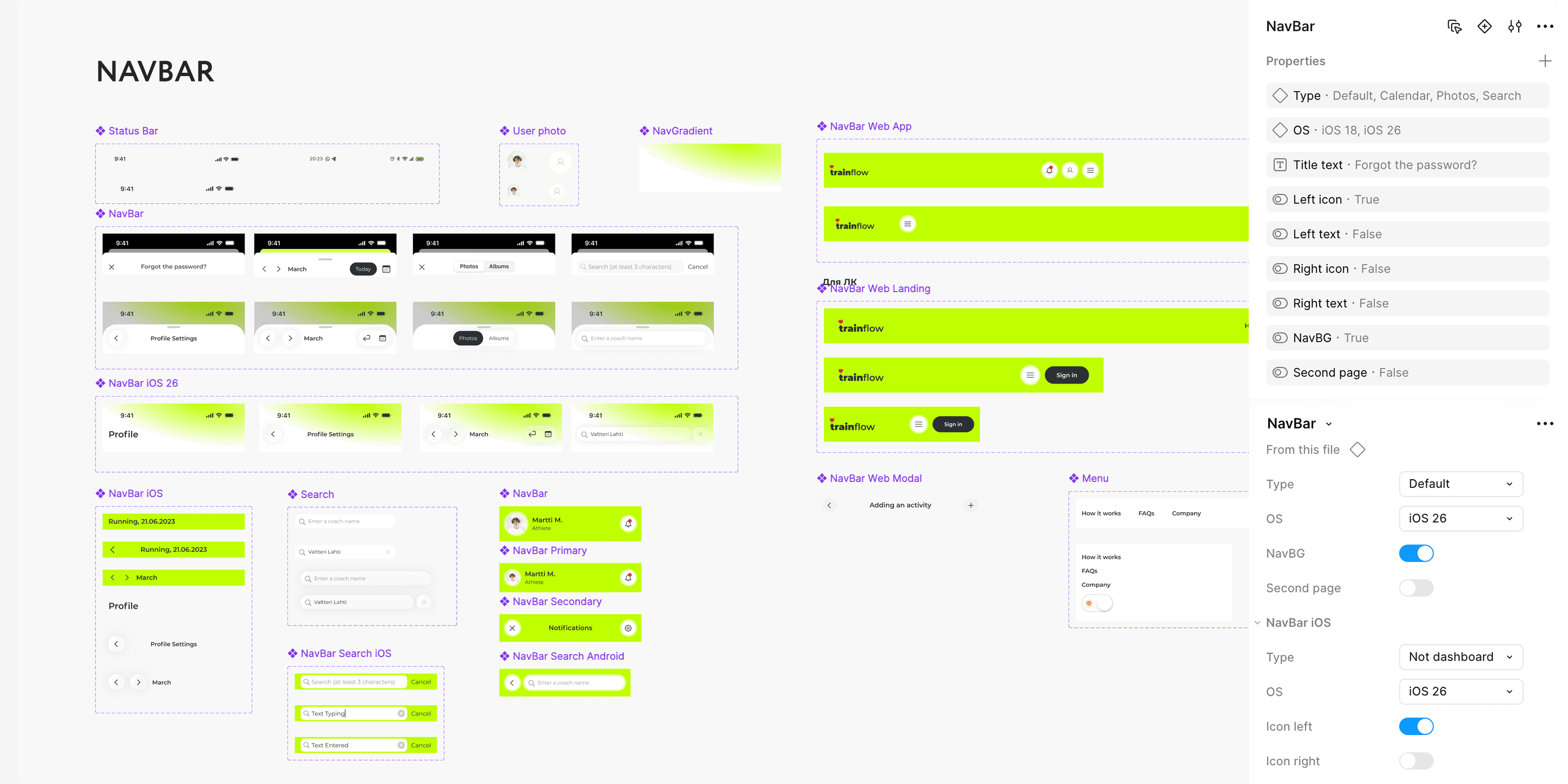
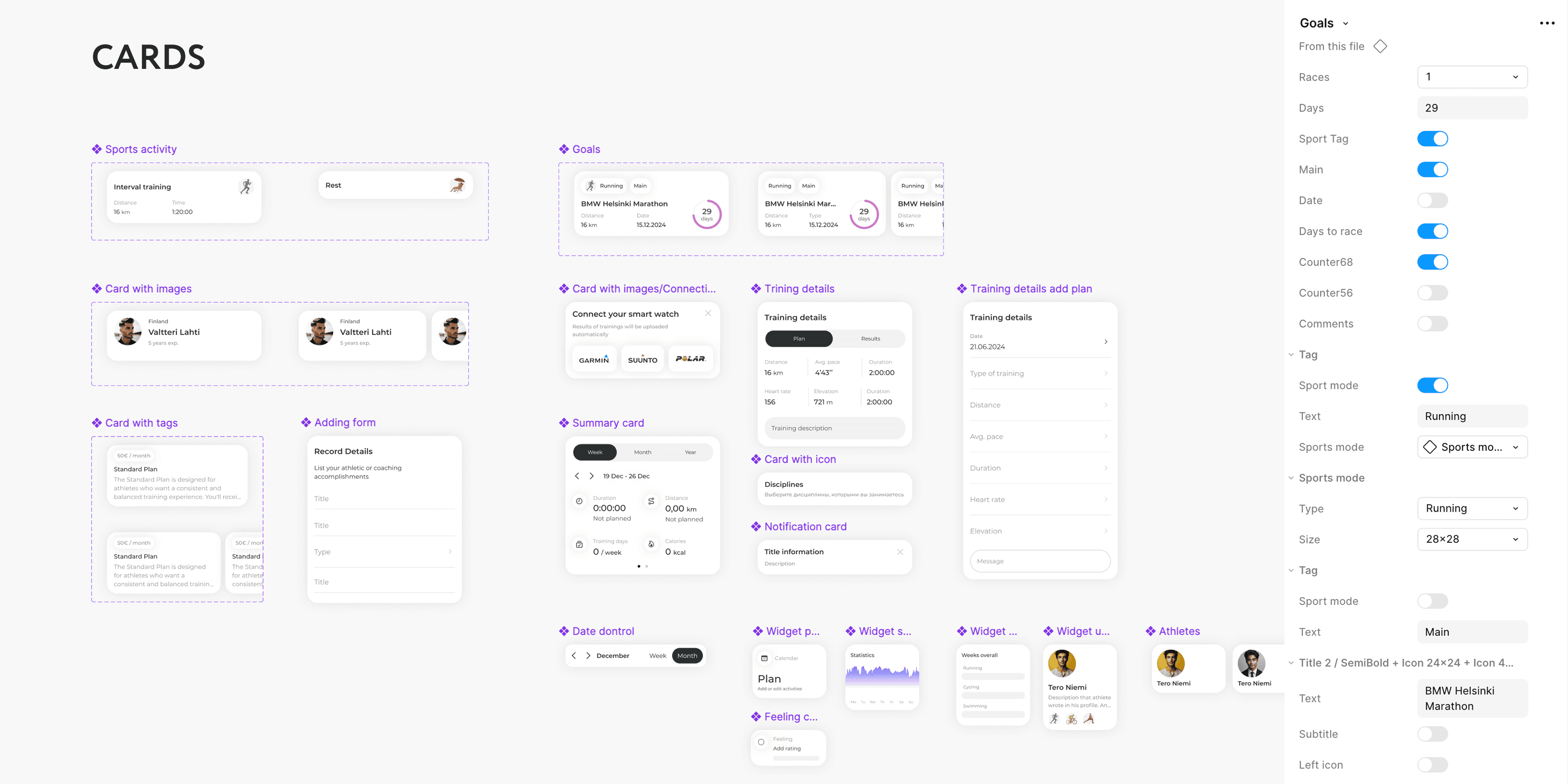
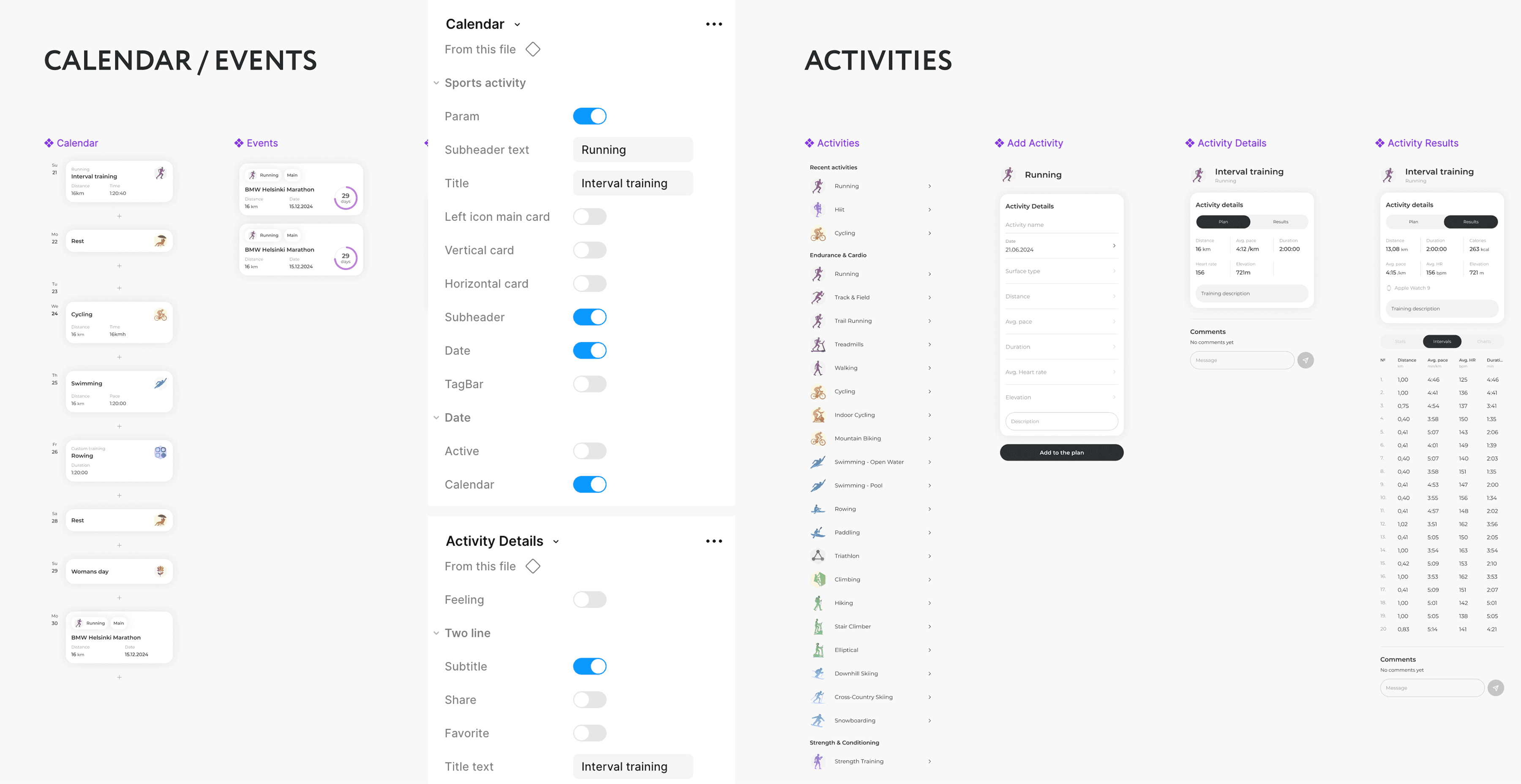
To support development across platforms, I created a cross-platform design system for iOS, Android, and Web. The system used design tokens and reusable components. This helped keep design and development in sync and ensured visual and interaction consistency across the product.
Driving product improvements through data
After the initial release, I analyzed user behavior using Mixpanel to understand how athletes used the product. By exploring funnels and user journeys, I found drop-off points and friction in key scenarios. These insights led to a series of improvements in later product iterations.
Shaping product direction through continuous research
Alongside analytics work, I continued user interviews and updated customer journey maps to track evolving user needs. Together with the team and stakeholders, we refined the product positioning and defined a long-term roadmap.
Driving acquisition and engagement
I also worked on improving acquisition and engagement through store optimization. This included updating store visuals and descriptions, running A/B tests, and improving install conversion. I also helped launch in-app events and LiveOps campaigns to increase engagement.
Scaling localization through automation
To simplify localization, I built a set of internal Figma plugins. They automated text extraction, translation key generation, and CSV uploads. This cut manual work by about 70-80% and reduced localization errors.
Ensuring product quality and consistency
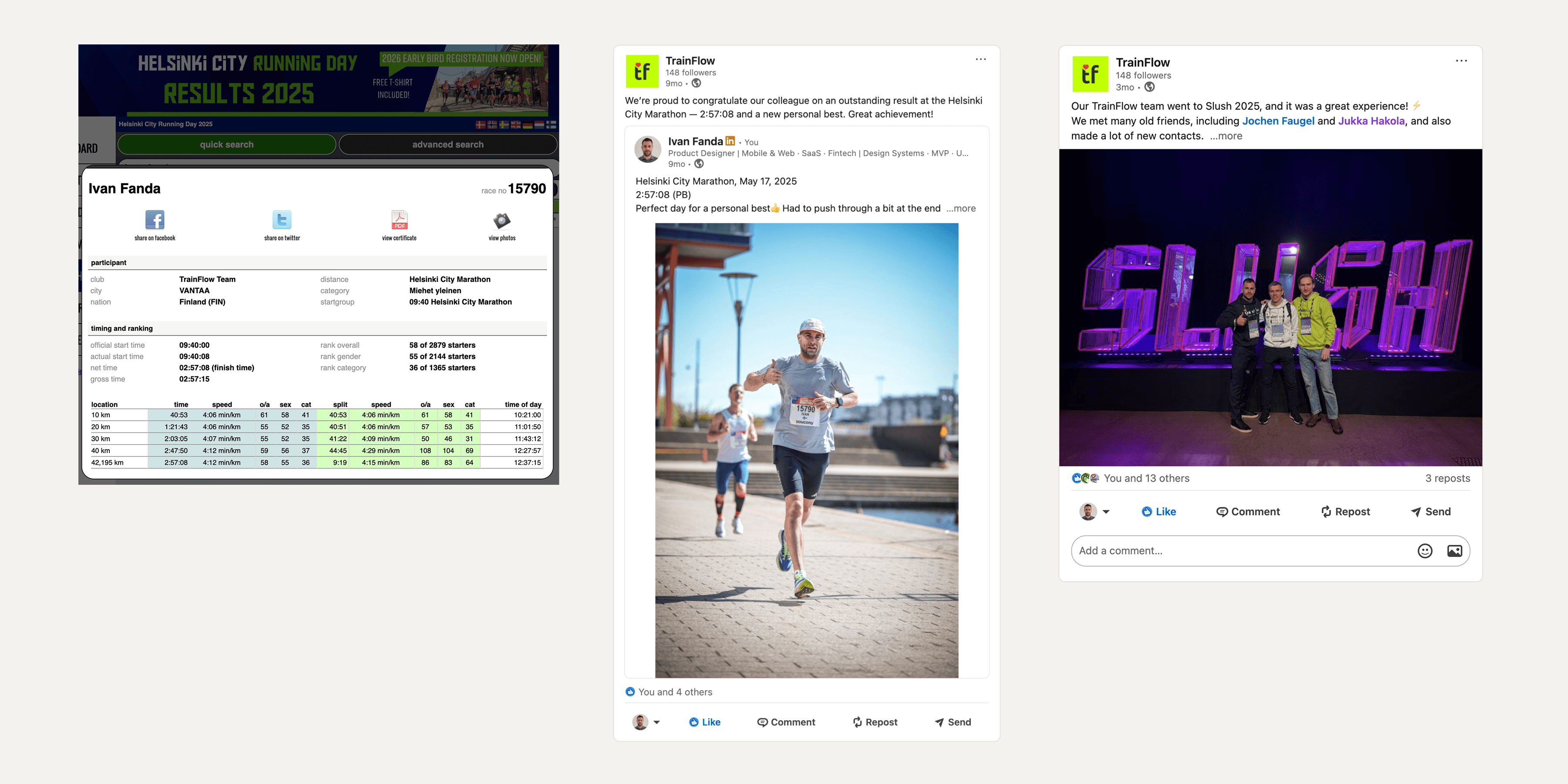
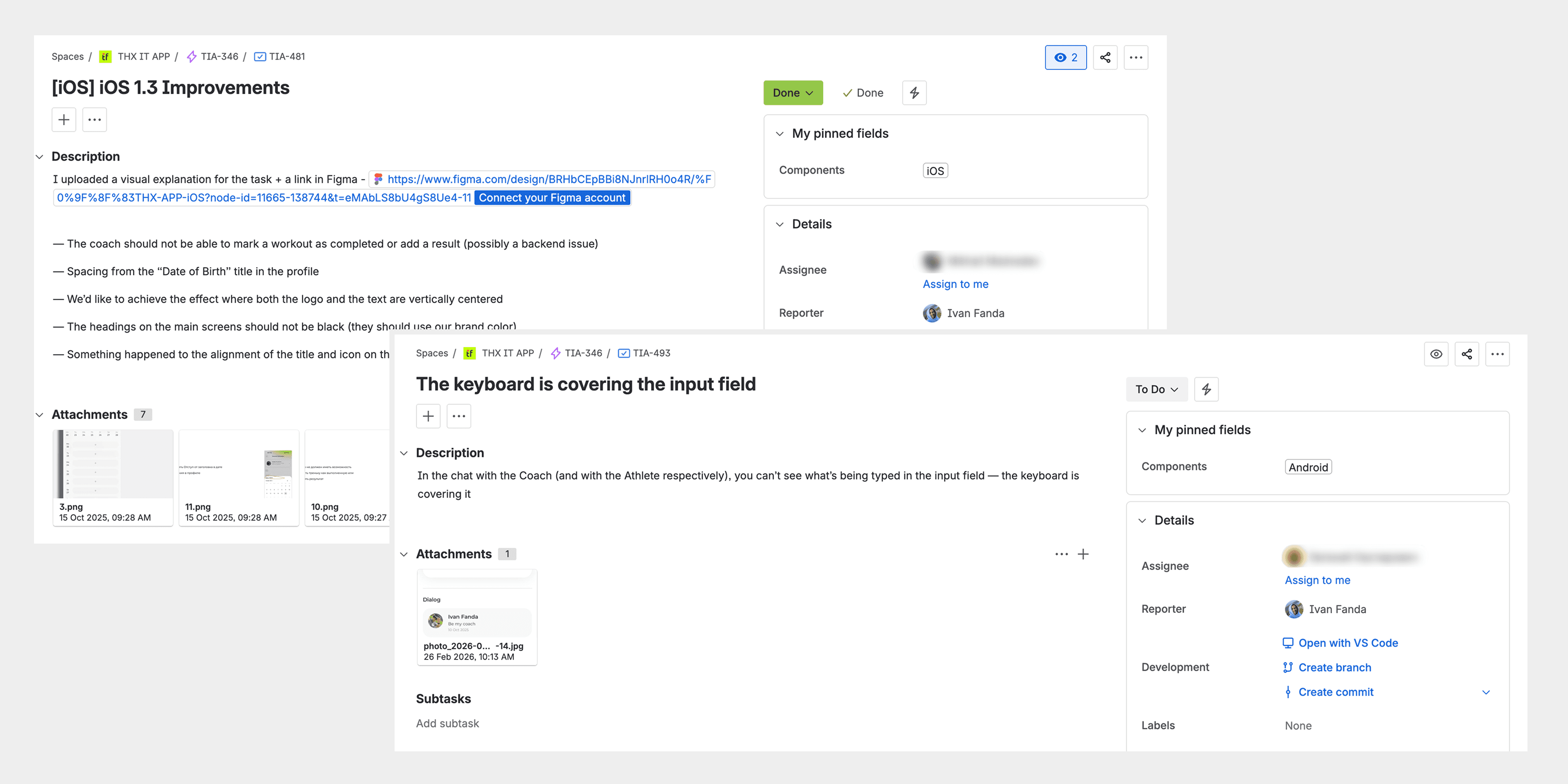
I took part in team intensives and investor events such as Slush, contributing to product discussions and helping communicate the product vision. In day-to-day work, I paid close attention to product quality: finding bugs, reporting inconsistencies, and working with engineering to get pixel-perfect implementation.
Through research-driven design and continuous iteration, TrainFlow became a clear, structured product that simplifies complex training workflows and helps athletes stay focused on their progress.